The Role of the Named Plaintiff in a Class Action Lawsuit

May 4, 2012 by Gregory J. Brod

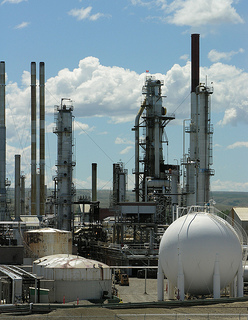
When a single event results in harm to a group of individuals, The Brod Law Firm is proud to be able to assist the victims by filing a class action lawsuit in California state or federal courts. Cases amenable to class action treatment can include a wide-range of issues such as business fraud, employment discrimination, securities violations, or industrial accidents, such as an explosion at the Richmond oil refinery. Class actions allow a group of similarly impacted individuals to bring their case collectively, saving resources for the individual plaintiffs and also providing an efficient mode for courts to hear similar claims.

gavel.png


This blog entry will concentrate on the role of the lead plaintiff in class actions. Also known as the representative plaintiff or named party, the lead plaintiff’s lends his or her name to the caption of the case (i.e. Smith et. al. vs. Defendant Company). The lead plaintiff is a representative member of the class who stands in for the group and acts on behalf of the full class. In some cases, more than one class member can share the role.

Given the importance of choosing an appropriate lead plaintiff, court rules require that the court approve the selection. Often the person who gets the litigation moving will later be deemed the lead plaintiff. In order to qualify for the role, the court must find that the lead plaintiff’s claims be typical of the claims in the class and that the lead plaintiff be capable of adequately representing the interests of the group as a whole. Certain types of cases have more specific requirements, such as a preference in certain securities cases to have the person with the largest financial interest take the lead role. Many courts impose a time limit on applications for the lead plaintiff role.

The lead plaintiff role comes with a number of responsibilities and, in general, involves exercising control over the claim and deciding what direction the case will take. It is the responsibility of the lead plaintiff to select counsel for the class and then to work closely with the chosen law firm. One of the first decisions that the lead plaintiff must take, in conjunction with counsel, is to determine the requirements for membership in the class. The lead plaintiff will then work with the attorney in the discovery process to identify facts that will support the claims alleged by the class. This can include having the lead plaintiff review documents and join counsel during information-gathering depositions. Defense counsel may also wish to take the deposition of the lead plaintiff during the discovery phase. In most class actions, it is not feasible for the entire class to be present for courtroom matters and the named party will usually attend hearings, and the trial if one becomes necessary, on behalf of the full class.

As with all civil litigation, a large percentage of class actions end in settlement rather than proceeding to a full trial. The lead plaintiff works with the class counsel to review any potential settlements. In reviewing a proposed settlement, the lead plaintiff must act on behalf of the full group and determine whether the proposal is fair and just for the class, not just whether it is in the lead plaintiff’s own interest. Other class members do have the ability to “opt out” if they disagree with a settlement but the lead plaintiff’s role in settlement is perhaps the heaviest responsibility that the role carries.

If a class action is successful with either a productive settlement or a verdict at trial, the named plaintiff may be receive an additional award beyond his or her share as a class member. This is also known as an incentive payment. The amount is based on several factors including the role the lead plaintiff took in the litigation (active versus more hands-off) and any financial risk incurred such as having paid for costs associated with the case, including monies spent providing notice of the action to potential class members or the cost of engaging in discovery.

If you believe that you may have a claim suitable for class action treatment, it is vital that you find a qualified law firm. We have the experience necessary to helping you file a successful class action in San Francisco or other Northern California location. Let The Brod Law Firm be your partner. Call our office for a free consultation to discuss your case and whether a California class action (state or federal) may be appropriate for your case.

See Related Blog Posts:
Barriers in Class Action Lawsuits
An Introduction To Class Actions

Legal Battles Continue Over 2010 BP Spill

April 23, 2012 by Gregory J. Brod

The San Francisco toxic tort law firm at The Brod Law Firm continues to follow the legal battles that have grown out of the 2010 oil spill in the Gulf of Mexico. We follow the developments because we want to be prepared to help victims should an oil spill in Sacramento or other Northern California oil and gas accidents result in harm to our community.
rig.png

As the Associated Press reported, last Wednesday, BP and a team of plaintiffs’ attorneys presented judge overseeing the BP cases with the formal terms of a proposed settlement for the pending class-action claims. The lawyers are looking for the judge to issue a preliminary approval that would impact BP and a plaintiff-side class composed of more than 100,000 businesses and individuals. There is no indication of how long it will take the judge to reach a ruling. Judge Barbier is expected to hold a formal fairness hearing to evaluate the settlement prior to issuing a final approval.

The proposed settlement would have BP paying an estimated $7.8 billion to resolve claims from private parties. Settlement papers put no cap on the total damages that BP may have to pay. If approved, it would be one of the largest class-action settlements in history. The parties believe the settlement is reasonable, fair, and adequate and that it builds a comprehensive system for awarding compensation to class members.

The settlement before the court does not attempt to resolve separate claims brought by the federal government and states in the Gulf water region against BP and its partners. Also not included are claims against Transocean Ltd., a Swiss-owner rig owner, and Halliburton, the cement contractor based in Houston. A May 3 status conference is planned to discuss the potential trial of these remaining claims.

Health issues are an important element of the agreement. As it currently stands, the settlement includes payment of medical claims brought by clean-up workers and others who claim the spill caused their illnesses. No such claims have been paid out of the already existing gulf Coast Claims Facility. The proposed settlement creates levels of compensation based on the particular illness at issue. The highest level of illness claim coverage would include a payment up to $60,700 plus payment of hospital and medical bills. Coverage for lesser claims such as problems with skin disorders and eye, throat, and nose issues. If approved, the settlement would also require BP to spend $105 million over a five year period to create and run an outreach program to provide medical evaluations to impacted individuals.

BP has also agreed to spend $2.3 billion to resolve seafood-industry claims including lost compensation for those who work in the fishing industry. Other claims that the settlement looks to resolves are business losses, lost wages, and property damages, including damage to vessels involved in the cleanup process. Plaintiffs’ attorney fees and related expenses are included in the settlement and capped at $600 million. The agreement also contemplates paying $57 million to help promote tourism in the region and to support the seafood industry. An additional $5 million payment is dedicated to helping educate Gulf Coast residents about how they can be part of the settlement. This may be the largest effort at providing notification to potential claimants of a settlement proposal.

Some concern has been raised over potentially limiting the geographic scope of included class members. Florida’s Attorney General has also voices concern about eliminating the current interim claims process.

The oil and gas industry are vital to our economies. They are large industries themselves and they supply needed energy to much of our society. The industries are, however, high-risk. The Brod Firm has experience bringing lawsuits against oil companies in California, including claims related to water contamination. We can work with individuals or help you understand and create a San Francisco class action complaint. We need to hold companies responsible when their actions harm our environment and cause economic losses and health concerns for our community. Let us help you do just that.

See Related Blog Posts:
Legal Battles in the Wake of Chevron Oil Spill in Brazil
Further Developments in the San Bruno Explosion Investigation

California Class Action Firm Following Developments Stemming from 2011 Oil Spill in Brazil

April 16, 2012 by Gregory J. Brod

The San Francisco class action attorney at The Brod Law Firm has been closely following developments stemming from an oil leak that occurred off the coast of Brazil last fall. Last month, The San Francisco Chronicle reported on developments stemming from the accident. The continuing story serves as a reminder of the importance of legal accountability following an oil-related accident. This story is particularly relevant to our coastal communities since a pipeline accident in California could impact dozens, hundreds, or even thousands of local residents and businesses.

oilrig.png

In November 2011, a drilling accident led to an oil spill at Chevron’s Frade field. The Frade site is a deep water field in the Atlantic Ocean off the coast of Rio de Janeiro. It is estimated that three thousand barrels of crude oil flowed into the water as a result of the Frade incident. According to allegations, the companies involved in the Frade project used faulty equipment, applied excessive drilling pressure, and failed to fulfill requirements aimed at preventing oil spills.

Brazilian authorities have filed lawsuits against Chevron as well as Transocean, the company that operated the Frade drilling rig, and Petroleo Brasilero SA (“Petrobas”), Brazil’s state-controlled oil producer. Individual company executives have also been named in the litigation with prosecutors seeking prison terms of up to thirty-one years on charges they obstructed the government’s investigation into the accident. Prosecutors are seeking $5.5 million each from Chevron and Transocean and additional damages of approximately $549,100 from the individual executives. Petrobas may be responsible for thirty percent of damages charged to Chevron. The Brazilian government suggests these civil damage figures reflect the environmental damage stemming from the Frade spill.

When a pipeline accident results in an oil spill, many are affected. As is the case in Brazil, the government may seek damages on its own behalf to reflect the environmental impact of the spill. Individuals and businesses in coastal communities may also suffer losses, especially if the spill occurs close to land. In some instances, a class action may be a good tool for oil spill victims. Class actions allow many victims to bring suit collectively. This can relieve some of the burden on individual plaintiffs. It can also help ensure that earlier plaintiffs do not deplete all of the defendant’s resources and leave later claimants without economic recourse. Furthermore, class litigation may be more effective for the judicial system, allowing one lawsuit to take the place of many individual claims and avoiding the danger of different courts reaching incompatible rulings.

The Brod Law Firm represents individuals and companies affected by oil spills in Northern California. Gregory Brod has specific experience litigating cases involving both the oil and gas industries. If you have been impacted by an oil spill or any other form of toxic tort, please contact our office. Our team can work with victims to explore potential class actions in San Francisco and surrounding areas.

See Related Blog Posts:
Further Developments in the San Bruno Explosion Investigation
An Introduction To Class Actions

Barriers in Class Action Lawsuits

April 1, 2012 by Gregory J. Brod

courthouse.jpgA class action lawsuit is a type of litigation where a large number of people with a common interest in a matter sue or are sued as a group. This type of legal action provides a convenient way to resolve disputes between large numbers of individuals with similar interests in one case. San Francisco class action lawyers know that class action lawsuits not only save the court time, but they can also be one of the only ways that litigants are able to bring realistically hold certain big interests accountable for their conduct.

Under Rule 23 of the Federal Rules of Civil Procedure, class action lawsuits can be seeking money damages or other remedies. Under the rule unnamed class members to a class action are bound by the judgment. However, in order to be bound the unnamed class members must be given adequate notice, adequate representation, and adequate opportunity to opt out before judgment. If you believe that you could be a member of a class action lawsuit it is advisable to contact a San Francisco class action attorney to determine your rights.

The issue of class action lawsuits recently made the news when AT&T lost a suit to wireless subscriber Matt Spaccarelli. Spaccarelli sued the company for slowing down his wireless service after he used 1.5 to 2 GB within one month in his unlimited data plan. Spaccarelli won his suit and was awarded $850, but AT&T was not forced to change its policy of slowing down service in unlimited plans. According to CNET it was not that Spaccarelli won that was surprising, but rather the fact that he was unable to bring a class action lawsuit against the wireless giant due to a clause contained in most wireless provider/subscriber contracts.

In 2011 the United States Supreme Court held that companies have the right to include clauses in contracts which disallow their subscribers to bring class action lawsuits against them. All four major wireless providers in American include such a clause in their contract. In AT&T’s case this leaves their subscribers with the option of utilizing the AT&T-funded arbitration program or filing in small claims court. Since over 90% of the country utilizes a cell phone, these clauses limit the legal rights of a substantial percentage of the country.

Experts, including California class action lawyers, differ on the effects of this type of clause in wireless provider/subscriber contracts. Some experts believe that the system of arbitration and small claims courts in inefficient and creates inconsistent rulings. Class action lawsuits have often been the catalysts for corporate change. Other experts believe that social media can have the same effect on corporate change without the sizeable expense of a class action lawsuit.

In any event, any time that you suspect that you have been hurt by a dangerous product or unfair practice—even if only in small ways—it is important to consult a Bay Area class action injury attorney such as the knowledgeable lawyers of Brod Firm. An attorney at the Brod Firm can help you determine what the best option is for your particular case in a free consultation. Call 800-427-7020 to schedule today.

See Related Blog Posts:

Further Investigation in San Bruno Explosion Investigation

Californians Must Protect Legal Rights After Refinery Explosions

Further Developments in the San Bruno Explosion Investigation

March 28, 2012 by Gregory J. Brod

Last week, our San Francisco pipeline accident law firm updated readers on safety concerns stemming from the 2010 San Bruno pipeline explosion. We wanted to follow-up and update our readers on developments being reported in this week’s San Francisco Chronicle.
pipeline.png

On September 9, 2010, a pipeline explosion occurred near Skyline Boulevard and San Bruno Avenue in San Bruno’s Crestmoor neighborhood. The explosion and resulting fire left eight people dead, completely destroying thirty-eight homes and damages many more properties. Pacific Gas and Electric (“PG&E”), the company responsible for operating the pipeline, dismissed allegations that the pipeline was being operated at an elevated, dangerous, and illegal level of pressure. The current Chronicle investigation revealed that at least three segments in the San Bruno natural gas pipeline were being operated at an illegally high pressure level.

Federal law gives companies the option to maintain records that justify higher pressure levels but the law requires that companies that do not possess specific information must operate on the assumption that the pipelines are the lowest grade and limit pressure accordingly. PG&E failed to provide the needed information and exceeded the allowable pressure limit on the San Bruno pipeline and thirty other lines in California. Reports suggest that the pipeline pressure may have been twenty percent about the legal limit. Several expert consultants have concluded that the disaster might have been averted had PG&E maintained the legally required pressure level.

These details are emerging as the California Public Utilities Commission is reviewing PG&E’s practices. The company is currently involved in hearings before an administrative law judge to determine what percentage of the costs involved in fixing pipeline issues can be passed on to natural gas customers. In conversations with state regulators earlier this year, PG&E placed the blame for pressure problems on a failure of senior-level accountability.

We trust that companies, particularly those involved with potentially dangerous substances, will operate in a safe manner. Too many companies risk public safety, often for an improvement in their bottom-line. The public should demand that safety be a foremost concern. We should hold companies and executives accountable when they fail to operate within the bounds of the law and with disregard for the public good.

The Brod Law Firm is proud to represent the public interest, including serving as a law firm for explosions in San Francisco and the surrounding areas. We represent victims of Northern California mass disasters. These California mass disaster lawsuits serve multiple goals. Unlike a criminal case, a civil lawsuit can provide compensation to victims to help them with the mountain of medical bills and property damage expenses in the wake of an accident. Furthermore, a civil lawsuit sends an important message to companies that the failure to prioritize safety will not be tolerated.

If you have been harmed by a company’s negligence, please contact our office for a free consultation. We will work with you and with other victims to obtain both compensation and justice.


See Related Blog Posts:
Safety in the Wake of the 2010 San Bruno Pipeline Explosion
California Residents Must Protect Legal Rights Following Refinery Injuries

An Introduction To Class Actions

March 19, 2012 by Gregory J. Brod

When a man-made disaster impacts our state, our California class action attorney is prepared to help. In cases involving toxic torts, such as a California oil refinery accident, The Brod Law Firm is prepared to use the tool of either a federal or state class action to ease the burden on individual plaintiffs and allow an entire group of victims to prove their case collectively.

courthouse.png

The most likely reason to bring a class action suit in federal court, instead of state court, is the diversity doctrine. This means that the suit involves at least one plaintiff who is a citizen of a different state than one or more of the defendants. For these purposes, companies are citizens of the state where they have their principle place of business. In order to file as a federal class, the plaintiffs must show four things: 1) Commonality (one or more issues is common to the whole class and, often, these common issues dominate over individual matters); 2) Adequacy (the selected representative can effectively protect the interests of all members of the class); 3) Numerosity (the class is large enough that individual lawsuits are not practical, making a class action a better method for resolving the matters); and 4) Typicality (the claim of the representative stems from a wrong to the class and is typical of the claims of the class members). These requirements aim to make sure that a class action is the best method for resolving a dispute and that a proper lead plaintiff is selected to represent the class in court.

Class actions can also be brought under state law. A few examples of the types of claims that might give rise to a class action in California are employment law violations, defective products claims, and consumer protection litigation. The rules governing class actions in California are a mix of guidance from statutes passed by the legislature and interpretations developed by state courts. Some of the basic requirements for a state class action mirror the requirements under federal law. California courts will also be more likely to grant certification of a class if doing so will serve a benefit to the class or to the citizens of the state as a whole and if the claims would be unlikely to be heard individually.

The selection of a lead plaintiff is an important part of any class action. Often the lead plaintiff is the person who reached out and got counsel involved in the matter but this is not always the case. The lead plaintiff must be deemed adequate by the court because the individual will work with the attorney to represent the interests of the entire class. The lead plaintiff should be someone whose claims are similar to that of the group as a whole and who is prepared to act on behalf of the entire class.

Class actions are complicated but they can be a useful tool when many individuals are impacted by the same wrongful act. The Brod Law Firm is prepared to act as class counsel in cases of San Francisco workplace accidents or when other incidents lead a group of victims with similar claims. If you believe you have suffered an injury that might give rise to a class action at either the state or federal level, please contact us for a free consultation. We will work closely with members of the class to ensure justice is achieved for all members of your class.

See Related Blog Posts:
The Importance of Healthy Workplaces: The Asbestos Example
U.S. Supreme Court’s ruling in Wal-Mart Stores v. Dukes will affect the certification of many class-action lawsuits

The Importance of Healthy Workplaces: The Asbestos Example

March 12, 2012 by Gregory J. Brod

America is a land of opportunity where hard work should earn you a good life. Unfortunately, or San Francisco workplace injury lawyer knows that too many of our residents are subject to dangerous working conditions. These conditions include hazardous chemicals that can cause a myriad of health problems, some of which don’t appear until many years later.
courthouse.png

One of the most publicized substances that has led to countless work-related sicknesses is asbestos. There are six major types of asbestos and the substance was widely used for many years because of its commercially beneficial properties. Asbestos fibers are resistant to heat and many chemicals, leading to use in a range of construction elements as well as textiles, cement, and protective coatings. Historians believe asbestos was used as far back as the first century A.D. and asbestos was a popular building material as recently as the 1970s and 1980s.

Many people have become ill as a result of asbestos exposure, including illnesses due to inhaling asbestos fibers at the workplace. Three major health problems associated with asbestos exposure are:

1. Lung cancer – The largest share of asbestos deaths are due to lung cancer. Asbestos-related lung cancer has been seen in several occupational areas including milling, mining, and the direct manufacture of asbestos products.
2. Asbestosis – This is a serious, long-term disease for which there is no effective treatment. Asbestosis results from the inhalation of asbestos fibers which irritate the lung tissue and lead to scarring, which makes it hard for the lungs to deliver oxygen to the blood.
3. Mesothelioma – A rare form of lung cancer, mesothelioma attacks the thin membranes that line the lung, chest, heart and abdomen. Almost all cases of the disease are due to asbestos exposure.

Asbestos claims represent the longest and most expensive instance of mass tort litigation in U.S. history. The RAND Corporation (a leading non-profit think tank headquartered in Santa Monica) reports that, as of 2002, asbestos-related litigation included over 730,000 claimants and 8,400 defendants. In 1999 alone, over 200,000 asbestos cases were pending in the federal system. The process of allocating compensation has been complicated by the long gestation period of the related illnesses, the sheer number of claims, and the fact that many defendant companies have had to file bankruptcy.

Individuals who believe they have suffered harm due to exposure to harmful substance at work should know they have legal rights. As with many other workplace health threats, many asbestos cases have been filed on behalf of groups of plaintiffs rather than individuals. Our Northern California class action lawyer knows that bringing claims as a class can alleviate some of the stresses of litigation on individual plaintiffs. Bringing claims as a group can allow individuals with similar circumstances to work together in proving that a shared workplace was dangerous and led to illnesses of even death.

If you or a loved one has been the victim of a work-related illness in San Francisco or the surrounding region, please reach out to The Brod Law Firm team for help in obtaining the compensation you deserve.

See Related Blog Posts:
U.S. Supreme Court’s ruling in Wal-Mart Stores v. Dukes will affect the certification of many class-action lawsuits
Hazardous Chemical Reaction at Monterey Hotel- Hazmat Situations in Everyday Circumstances


U.S. Supreme Court’s ruling in Wal-Mart Stores v. Dukes will affect the certification of many class-action lawsuits

July 11, 2011 by Gregory J. Brod

The U.S. Supreme Court recently heard a case that addressed the rights of employees to bring certain class-action lawsuits. In Wal-Mart Stores v. Dukes, et al., which was decided on June 20, 2011, the U.S. Supreme Court threw out the claims of over one million women, who were suing Wal-Mart based on discrimination in the workplace. There was no decision by the U.S. Supreme Court as to whether or not the women were, in fact, discriminated against on the basis of their gender in decisions regarding pay and promotions. Instead, it was decided that the women could not proceed as a class action to bring their claims. Part of the Court’s rationale was based on the plaintiffs’ inability to show a “communality of issue”, or that the plaintiffs had all suffered essentially the same harm.

Federal Rule of Civil Procedure Rule 23 (a)(2) requires a party seeking class certification to prove that the class has common "questions of law or fact.” The Supreme Court essentially held that the class in Wal-Mart Stores v. Dukes was not certified properly, and relied upon its decision in General Telephone Co. of Southwest v. Falcon 457 U.S. 147, 157-158 (1982) to reject the class for a lack of communality. In Falcon, the U.S. Supreme Court found a wide gap between the claims of promotion discrimination and the allegations that the company had a policy to engage in such discrimination.

The impact of the Supreme Court’s ruling in Wal-Mart Stores v. Dukes will affect the ability of other class-action cases to become certified in areas that certainly include employment, but also include products liability or consumer class-action claims.

Continue reading "U.S. Supreme Court’s ruling in Wal-Mart Stores v. Dukes will affect the certification of many class-action lawsuits " »