June 9, 2009

San Francisco Injury Lawyer Comments on Rollover Accident

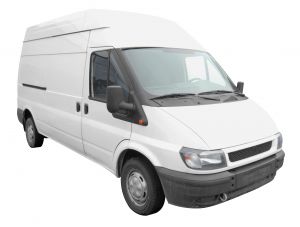
Last month a federal court jury awarded $18.3 million in damages to a Bay Area musician who suffered a fractured spine and was paralyzed when his bands rented Ford E-350 van rolled over on an icy highway in 2005. During the rollover his seat broke loose from the floor and pinned him against the roof. Usually death or injuries that occur during a rollover are the result of vehicle instability, roof crush and other compartment failures, or defective seatbelts-- all of which are preventable. The overall large number of drashes involving fifteen-passenger vans, especially loaded fifteen-passenger vans, have raised the question as to whether they are unusually susceptible to rollovers. According to a piece of research put out by the NHTSA, fifteen-passenger vans differ from most light truck vehicle in that they have large payload capacity and the occupants sit fairly high up in the vehicle. Therefore, when loaded, the vehicle may have a much worse rollover propensity. Also, when a 15 passenger van is loaded, its center of gravity shifts upward and rearward, increasing the likelihood to rollover. This shift in the center of gravity also increases the potential for loss of control and panic maneuvers.

Here at the Brod Law Firm, we believe the auto industry should be held accountable for death due to rollovers on roads and highways. As a result of the above mentioned types of litigation,and other types like it, the automobile industry is in the process of changing the design of these vehicles so that they are safer and more controllable. Some of the new technologies being employed are:
1. Electronic Steering Control, controls designed to assist drivers when they are in emergency situations. This technology helps drivers maintain control of the vehicle during extreme steering maneuvers by keeping the vehicle headed in the driver’s intended direction, even when the vehicle nears or exceeds the limits of road traction.
2. Rollover Air Bags that deploy downward from the overhead roof rail, very close to the side windows. The rollover sensing system can determine an imminent rollover when the roll angle is very small and all four wheels are still on the ground. When deployed as rollover air bags, side-impact head air bags will stay inflated longer to help protect the heads of the occupants during the rollover. They also keep the occupants of the outboard seats from being thrown from the vehicle. The combination of these air bags and properly worn safety belts can significantly reduce the chance of ejection.
3. Variable Ride-Height Suspension, a mechanism that raises or lowers the ride height of the vehicle while it is in motion. Some VRHS systems operate automatically, while others require the driver to select the appropriate mode. VRHS systems can have a favorable effect on a vehicle’s likelihood to rollover because they lower the height of the vehicle’s center of gravity and improve stability for highway driving.

March 19, 2009

Dangerous Products - Manufacturers fight with all of their corporate power

In October 2003, a Jeep was rear-ended by a tractor trailer in Virginia, causing the Jeep to roll over several times. A passenger in the Jeep suffered brain damage as a result of the crash, and a Virginia jury awarded her $10.2 million dollars. The trucking firm that was a defendant in the case argued that the woman’s brain injuries were due to a previous incident, not the crash involving the Jeep. Although the jury awarded $10.2 million dollars, the matter was appealed, and the Virginia Supreme Court upheld the jury verdict.

It is 2009, nearly six years after this tragic event, and the injured woman is only now receiving closure to her ordeal, at least as far as it relates to the judicial process. Corporate defendants often do not take any responsibility, whatsoever, for the injuries they cause. Despite a jury of her peers finding that she was entitled to an award of damages, the corporate defendants in the Virginia case fought for years, undoubtedly spending hundreds of thousands of dollars. The “tort-reform” lobby, which is primarily funded by the insurance industry, puts massive efforts and spares no expense into labeling many lawsuits as “frivolous”. However, the public rarely hears about cases involving a “frivolous defenses”. There are many instances in which a corporate defendant or insurance company vigorously defends a claim (which results in a lawsuit), even though there is no good faith basis to do so, or even if it makes no sense from a financial basis. In many cases, the corporate defendant or insurance company will spend far more in defending a claim than the total amount sought by an injured person. The reason is to “send a message” to injured people that should they pursue their rights, it will be costly, time consuming, difficult, and will be fought tooth and nail. It is therefore very important to ensure that when an injured person in selecting a lawyer to help them, that the lawyer be prepared to vigorously fight for their rights.

February 6, 2009

California Rollover Accident Leaves Passengers Unharmed

The other day an article about a rollover accident, involving a black Ford Explorer in Orange County, California, caught our attention. The accident was a single vehicle accident in which the driver and passenger, an infant strapped in a car seat, were not injured after rolling over, at least once, through two lanes of traffic. We find stories such as these amazing, since so many rollover accidents usually end in injury or death of passengers. What is more, the amazing outcome of this accident proves car seats do save lives. According to a recent article in the Washington Post, regarding a study done by the Traffic Safety Center at the Department of Environmental Sciences at the UC Berkeley, placing infants and small children in age-appropriate car seats significantly reduces the odds that they will die if they are in a motor vehicle accident. Specifically, the study found, the odds of a baby under 1 year of age dying in a car accident dropped by 73 percent if the infant was riding in a baby car seat. And the odds of children between 1 and 2 dying in a collision went down by 76 percent when they were properly restrained. Also, car seats were found to be most effective in preventing fatalities in rollover accidents.
Not only are car seats important for providing safety to infants and toddlers, but finding the right safety car seat is key to saving their lives. The American Academy of Pediatrics (AAP) recommends that all infants should ride rear- facing, starting with their first ride home from the hospital. Once a child has reached the highest weight allowed by the manufacturer of a rear-facing car seat, they should ride in a forward-facing seat. They should ride in a forward-facing seat with a harness until they outgrow it—usually when they are about 4 years of age. Booster seats are recommended for older children who have outgrown their forward-facing seats. And a child should stay in a booster seat until adult seat belts fit correctly—usually when the child reaches about 4’9” in height and is between 8-12 years of age.
We, the attorneys here at the Brod Law Firm, find these tips very useful for anyone who drives with their children, as our most important concern is public safety. Although we are ready to assist anyone involved in any type of accident, whether it is catastrophic or minor, we are glad when we hear about accidents like this one involving an unharmed driver and infant after a rollover.