Northern California Disaster Law Firm Continues to Follow Claims Stemming from 2010 BP Oil Spill

May 17, 2012 by Gregory J. Brod

At The Brod Law Firm, we serve those impacted by environmental disasters in San Francisco and throughout Northern California. Our San Francisco class action attorney can handle cases in both federal and state courts in the state. We keep informed about important cases throughout the nation so that we can better serve our local communities when similar issues arise in our jurisdiction.

One of the biggest environmental disasters in recent years was the 2010 Deepwater Horizon Oil spill. On April 20, 2010, an explosion rocked at a nine year old offshore drilling unit that was being leased and operated by BP. Within a couple of days, an oil slick appeared near the rig, confirming fears that the explosion had caused a leak. Before the leak was stemmed, approximately 4.9 million barrels of oil leaked into the Gulf of Mexico waters. Industries and individuals in several states suffered significant economic losses as a result of the spill and the clean-up effort. Health concerns remain an issue for Gulf coast residents.

The oil spill resulted in multiple lawsuits, including individual and class claims against BP. The filing deadline for the existing Quick Payment program has recently been extended from May 7 to June 11. Pursuant to the program, individual claimants are eligible for a $5,000 payment and businesses can receive $25,000. By filing a claim and receiving a payment pursuant to the Quick Payment program, claimants waive the right to any future claims stemming from the 2010 disaster with the exception of those related to injury or death.

Authorities overseeing the resolution of claims are in the process of phasing out the existing Gulf Coast Claims Facility (“GCCF”). Instead of the GCCF, claims will be handled by a Court-Supervised Settlement Program. This program is part of a settlement agreement applicable to more than 100,000 claimants and is a portion of the resolution to two class actions against BP. It is designed to determine and remedy both individual and business losses stemming from the Deepwater Horizon accident via a court-supervised process. In setting forth the terms of the process, United States District Judge Carl Barbier has implemented a filing deadline of either April 22, 2014 or six months from the effective date of the settlement.

Pursuant to the court-supervised program, individual claim amounts will be calculated by estimating the difference between projected earnings and actual earnings for the period between May 2010 and either December 2010 or April 2011, depending on the industry involved. Additional awards to individual claimants will account for costs of lost health insurance and pension benefits, as well as the costs involved in job searches or re-training necessitated by the spill. Existing businesses will be compensated based on profit losses that lasted for three or more consecutive months in the eight month period following the spill and also based on comparing profits to growth trends at the industry and economy-wide levels. The court-supervised program also sets forth guidance for compensating failed start-up businesses, successful start-ups that may have been limited by the spill, and losses impacting multi-facility businesses.

As a Northern California toxic tort law firm, we are prepared to help should an environmental disaster akin to the Deepwater Horizon oil spill impact our region. Our San Francisco oil and gas lawyer will continue to follow the lawsuits stemming from the 2010 tragedy so that our team can better serve local individuals and businesses that may be harmed by a spill in the Pacific waters or by another industrial accident that results in similar economic and/or health damages.

See Related Blog Posts:
Proposed Gas Storage Field Raises Safety Concerns
Safety in the Wake of the 2010 San Bruno Pipeline Explosion


Proposed Gas Storage Field Raises Safety Concerns

May 9, 2012 by Gregory J. Brod

Safety is always foremost in the mind of our Sacramento natural gas accident attorney and our entire legal team. The Brod Law Firm is proud to support victims of utility accidents in Sacramento and to represent both individuals and class action groups in Sacramento toxic tort lawsuits. We also support efforts to ensure that utility companies operate in a safe manner that helps to prevent tragic accidents that can end or forever alter the lives of our fellow Californians.

Commissioner Florio of the California Public Utilities Commission (“PUC”) is working to block a local utility company from storing natural gas in a sandstone formation 3,800 feet below Avondale Glen Elder, a neighborhood in Sacramento. Florio is opposing the request by Sacramento National Gas Storage LLC to undertake the $70 million project and store 7.5 billion cubic feet of natural gas. The site is the former Florin Gas Field, a depleted natural gas reservoir, located underneath a 379 acre parcel of land containing more than 700 homes. If the PUC approves the request, the company would then need to seek a permit from the city for the project. Ultimately, the company would seek contracts with utility companies looking to store gas at the location. Company officials say they already have a commitment from the Sacramento Municipal Utility District that would use at least half of the field’s capacity.

In his statement opposing the project, Florio cited three significant impacts that, per the environmental impact report, could not meet the requirement of being mitigated to less than significant levels. The three areas are: 1) Potential hazard of a gas leak following gas field re-pressurization for storage; 2) Potential impact on the quality of groundwater due to operations and maintenance of the gas field; and 3) Temporary elevation of noise levels due to construction at the wellhead site. Florio notes that some of the potential for leaks is low but that the impact could be catastrophic and long-lasting.

Approximately three-quarters of the impacted property owners have signed agreements permitting the company to store gas beneath their properties in exchange for initial $500 bonuses and future annual lease payments. While some community organizers applauded Florio’s opposition statement, company representatives note that two other proposed rulings from the PUC have advocated in favor of approval, suggesting the project is safe and necessary for the region. One filing from PUC Administrative Law Judge Richard Smith concluded that the benefits of the project, including economic and social results, justify approving the proposal despite unavoidable environmental impacts. PUC Commissioner Timothy Alan Simon also wrote in support of the project but did call for additional conditions including requiring the company to purchase a general liability policy that would cost $4 million and provide a minimum of $100 million in coverage. Simon also called for the company to purchase a surety bond that would cover potential costs such as remedying negative impacts of groundwater.

Gregory Brod is an experienced Sacramento utility accident attorney. The team at The Brod Law Firm urges the PUC and officials in Sacramento to make safety a priority as they consider the natural gas storage proposal. We are prepared to represent victims of natural gas and oil industry accidents but know that prevention is always the best option.

See Related Blog Posts:
Safety in the Wake of the 2010 San Bruno Pipeline Explosion
California Residents Must Protect Legal Rights Following Refinery Injuries

Legal Battles Continue Over 2010 BP Spill

April 23, 2012 by Gregory J. Brod

The San Francisco toxic tort law firm at The Brod Law Firm continues to follow the legal battles that have grown out of the 2010 oil spill in the Gulf of Mexico. We follow the developments because we want to be prepared to help victims should an oil spill in Sacramento or other Northern California oil and gas accidents result in harm to our community.
rig.png

As the Associated Press reported, last Wednesday, BP and a team of plaintiffs’ attorneys presented judge overseeing the BP cases with the formal terms of a proposed settlement for the pending class-action claims. The lawyers are looking for the judge to issue a preliminary approval that would impact BP and a plaintiff-side class composed of more than 100,000 businesses and individuals. There is no indication of how long it will take the judge to reach a ruling. Judge Barbier is expected to hold a formal fairness hearing to evaluate the settlement prior to issuing a final approval.

The proposed settlement would have BP paying an estimated $7.8 billion to resolve claims from private parties. Settlement papers put no cap on the total damages that BP may have to pay. If approved, it would be one of the largest class-action settlements in history. The parties believe the settlement is reasonable, fair, and adequate and that it builds a comprehensive system for awarding compensation to class members.

The settlement before the court does not attempt to resolve separate claims brought by the federal government and states in the Gulf water region against BP and its partners. Also not included are claims against Transocean Ltd., a Swiss-owner rig owner, and Halliburton, the cement contractor based in Houston. A May 3 status conference is planned to discuss the potential trial of these remaining claims.

Health issues are an important element of the agreement. As it currently stands, the settlement includes payment of medical claims brought by clean-up workers and others who claim the spill caused their illnesses. No such claims have been paid out of the already existing gulf Coast Claims Facility. The proposed settlement creates levels of compensation based on the particular illness at issue. The highest level of illness claim coverage would include a payment up to $60,700 plus payment of hospital and medical bills. Coverage for lesser claims such as problems with skin disorders and eye, throat, and nose issues. If approved, the settlement would also require BP to spend $105 million over a five year period to create and run an outreach program to provide medical evaluations to impacted individuals.

BP has also agreed to spend $2.3 billion to resolve seafood-industry claims including lost compensation for those who work in the fishing industry. Other claims that the settlement looks to resolves are business losses, lost wages, and property damages, including damage to vessels involved in the cleanup process. Plaintiffs’ attorney fees and related expenses are included in the settlement and capped at $600 million. The agreement also contemplates paying $57 million to help promote tourism in the region and to support the seafood industry. An additional $5 million payment is dedicated to helping educate Gulf Coast residents about how they can be part of the settlement. This may be the largest effort at providing notification to potential claimants of a settlement proposal.

Some concern has been raised over potentially limiting the geographic scope of included class members. Florida’s Attorney General has also voices concern about eliminating the current interim claims process.

The oil and gas industry are vital to our economies. They are large industries themselves and they supply needed energy to much of our society. The industries are, however, high-risk. The Brod Firm has experience bringing lawsuits against oil companies in California, including claims related to water contamination. We can work with individuals or help you understand and create a San Francisco class action complaint. We need to hold companies responsible when their actions harm our environment and cause economic losses and health concerns for our community. Let us help you do just that.

See Related Blog Posts:
Legal Battles in the Wake of Chevron Oil Spill in Brazil
Further Developments in the San Bruno Explosion Investigation

California Class Action Firm Following Developments Stemming from 2011 Oil Spill in Brazil

April 16, 2012 by Gregory J. Brod

The San Francisco class action attorney at The Brod Law Firm has been closely following developments stemming from an oil leak that occurred off the coast of Brazil last fall. Last month, The San Francisco Chronicle reported on developments stemming from the accident. The continuing story serves as a reminder of the importance of legal accountability following an oil-related accident. This story is particularly relevant to our coastal communities since a pipeline accident in California could impact dozens, hundreds, or even thousands of local residents and businesses.

oilrig.png

In November 2011, a drilling accident led to an oil spill at Chevron’s Frade field. The Frade site is a deep water field in the Atlantic Ocean off the coast of Rio de Janeiro. It is estimated that three thousand barrels of crude oil flowed into the water as a result of the Frade incident. According to allegations, the companies involved in the Frade project used faulty equipment, applied excessive drilling pressure, and failed to fulfill requirements aimed at preventing oil spills.

Brazilian authorities have filed lawsuits against Chevron as well as Transocean, the company that operated the Frade drilling rig, and Petroleo Brasilero SA (“Petrobas”), Brazil’s state-controlled oil producer. Individual company executives have also been named in the litigation with prosecutors seeking prison terms of up to thirty-one years on charges they obstructed the government’s investigation into the accident. Prosecutors are seeking $5.5 million each from Chevron and Transocean and additional damages of approximately $549,100 from the individual executives. Petrobas may be responsible for thirty percent of damages charged to Chevron. The Brazilian government suggests these civil damage figures reflect the environmental damage stemming from the Frade spill.

When a pipeline accident results in an oil spill, many are affected. As is the case in Brazil, the government may seek damages on its own behalf to reflect the environmental impact of the spill. Individuals and businesses in coastal communities may also suffer losses, especially if the spill occurs close to land. In some instances, a class action may be a good tool for oil spill victims. Class actions allow many victims to bring suit collectively. This can relieve some of the burden on individual plaintiffs. It can also help ensure that earlier plaintiffs do not deplete all of the defendant’s resources and leave later claimants without economic recourse. Furthermore, class litigation may be more effective for the judicial system, allowing one lawsuit to take the place of many individual claims and avoiding the danger of different courts reaching incompatible rulings.

The Brod Law Firm represents individuals and companies affected by oil spills in Northern California. Gregory Brod has specific experience litigating cases involving both the oil and gas industries. If you have been impacted by an oil spill or any other form of toxic tort, please contact our office. Our team can work with victims to explore potential class actions in San Francisco and surrounding areas.

See Related Blog Posts:
Further Developments in the San Bruno Explosion Investigation
An Introduction To Class Actions

Legal Battles in the Wake of Chevron Oil Spill in Brazil

April 8, 2012 by Gregory J. Brod

Legal Battles in the Wake of Chevron Oil Spill in Brazil
Our San Francisco oil accident lawyer has been following the legal battles resulting from an oil spill. The spill occurred in November 2011 in an area offshore of Brail known as Frade Field. Chevron had a $3.6 billion project running at the time the spill occurred and approximately three thousand barrels of crude oil escaped into the Atlantic Ocean. Notably, the project had been proceeding under strict scrutiny in the wake of the 2010 Macondo spill that occurred in the Gulf of Mexico.

Criminal charges have been formally filed against Chevron and Transocean executives relating to the oil pipeline leaks. Investigations suggest that the companies used excessive pressure while drilling in the Frade field area. Prosecutors also charge that Chevron used faulty equipment and failed to meet industry requirements that aim to prevent and counter spills. Individual executives, including George Buck who is the head of Chevron’s Brazil operations, have been charged with obstructing the post-spill investigations. Those charges can carry prison sentences of up to thirty-one years.
Overall Brazilian authorities suggest that Chevron acted carelessly when it carried out operations at the Frade site. Prosecutors in Brazil are asking Chevron and TrasnOcean to pay $5.5 million and are seeking penalty payments of around $549,100 from individual executives. Chevron has denied all charges involving the company and its representatives. The judge in the case has ordered that certain executives may not leave Brazil without specific permission from the court.

pipeline2.png

The Frade site has been producing approximately 60,000 barrels of oil per day. About half of that production is credited to Chevron. The company is headquartered in San Ramon, making news about Chevron of particular interest to those concerned about Northern California oil safety.
Just last month, a smaller seepage was identified in the Frade project resulting in a sheen that covered just over one kilometer. A Chevron spokesman suggested that the new leak was from a different field than the larger November incident.

Federal regulators and criminal charges play an important role in preventing industrial accidents and in holding companies and individuals accountable when the failure to exercise due case results in a dangerous or even deadly. However, victims of Northern California oil accidents should recognize that a criminal case is about punishing the wrongdoers, not compensating those the accident harmed. Victims need to contact a skilled an experienced victim’s rights attorney. A civil suit is the only way for those who suffered financial losses, injury, or even death to receive the compensation that they need and that they are owed. In some cases, these lawsuits can be a standard claim brought by (or on behalf of) a single plaintiff. Where the accident caused a similar harm to a large number of victims, a class action lawsuit may be appropriate. The class action method can ease the burden on individual claimants, especially where the likely recovery per claimant is small and the effort of bringing suit makes more sense when multiple smaller claims add up to a large group recovery.

Whether you pursue your claim as an individual or you want to explore the possibility of a class action, The Brod Law Firm is here to help. We serve San Francisco, Oakland, Sacramento and other communities in Northern California. We are a dedicated victims rights law firm. We often handle plaintiff’s claims on a contingency basis and always offer a free consultation for new clients.

See Related Blog Posts:
Further Developments in the San Bruno Explosion Investigation

California Residents Must Protect Legal Rights Following Refinery Injuries

Further Developments in the San Bruno Explosion Investigation

March 28, 2012 by Gregory J. Brod

Last week, our San Francisco pipeline accident law firm updated readers on safety concerns stemming from the 2010 San Bruno pipeline explosion. We wanted to follow-up and update our readers on developments being reported in this week’s San Francisco Chronicle.
pipeline.png

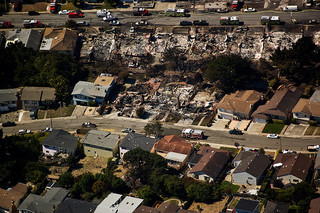
On September 9, 2010, a pipeline explosion occurred near Skyline Boulevard and San Bruno Avenue in San Bruno’s Crestmoor neighborhood. The explosion and resulting fire left eight people dead, completely destroying thirty-eight homes and damages many more properties. Pacific Gas and Electric (“PG&E”), the company responsible for operating the pipeline, dismissed allegations that the pipeline was being operated at an elevated, dangerous, and illegal level of pressure. The current Chronicle investigation revealed that at least three segments in the San Bruno natural gas pipeline were being operated at an illegally high pressure level.

Federal law gives companies the option to maintain records that justify higher pressure levels but the law requires that companies that do not possess specific information must operate on the assumption that the pipelines are the lowest grade and limit pressure accordingly. PG&E failed to provide the needed information and exceeded the allowable pressure limit on the San Bruno pipeline and thirty other lines in California. Reports suggest that the pipeline pressure may have been twenty percent about the legal limit. Several expert consultants have concluded that the disaster might have been averted had PG&E maintained the legally required pressure level.

These details are emerging as the California Public Utilities Commission is reviewing PG&E’s practices. The company is currently involved in hearings before an administrative law judge to determine what percentage of the costs involved in fixing pipeline issues can be passed on to natural gas customers. In conversations with state regulators earlier this year, PG&E placed the blame for pressure problems on a failure of senior-level accountability.

We trust that companies, particularly those involved with potentially dangerous substances, will operate in a safe manner. Too many companies risk public safety, often for an improvement in their bottom-line. The public should demand that safety be a foremost concern. We should hold companies and executives accountable when they fail to operate within the bounds of the law and with disregard for the public good.

The Brod Law Firm is proud to represent the public interest, including serving as a law firm for explosions in San Francisco and the surrounding areas. We represent victims of Northern California mass disasters. These California mass disaster lawsuits serve multiple goals. Unlike a criminal case, a civil lawsuit can provide compensation to victims to help them with the mountain of medical bills and property damage expenses in the wake of an accident. Furthermore, a civil lawsuit sends an important message to companies that the failure to prioritize safety will not be tolerated.

If you have been harmed by a company’s negligence, please contact our office for a free consultation. We will work with you and with other victims to obtain both compensation and justice.


See Related Blog Posts:
Safety in the Wake of the 2010 San Bruno Pipeline Explosion
California Residents Must Protect Legal Rights Following Refinery Injuries

Safety in the Wake of the 2010 San Bruno Pipeline Explosion

March 21, 2012 by Gregory J. Brod

As your San Francisco pipeline accident law firm, we are continuing to follow the response of area companies in the wake of the deadly San Bruno pipeline explosion that took place in September of 2010.

A massive explosion occurred in San Bruno’s Crestmoor neighborhood at 6:11 P.M. on September 9, 2010. The explosion, which occurred near Skyline Boulevard and San Bruno Avenue, and resulting fire led to eight deaths and destroyed 38 homes while damaging many others. According to fire officials, it was between sixty and ninety minutes after the explosion before the gas in the area was shut off. Firefighters were not able to extinguish the resulting blaze until after eleven the following morning. PG&E owned the pipeline, a thirty inch steel transmission line, that was involved in the San Bruno disaster. The company reduced operating pressures following the incident by twenty percent in the wake of concerns the pipelines may have been installed improperly. In the aftermath of the incident, the California Public Utilities commission required PG&E re-evaluate the method it uses to determine peak operating pressure throughout 1,800 miles of pipelines. The company failed to meet an initial March 2011 compliance deadline but it unveiled a plan in August 2011 to modern the system and enhance safety. During subsequent strength testing, on November 6, 2011 another explosion occurred in the Woodside area. Luckily no deaths were reported.

This week, executives from Pacific Gas and Electric Company (“PG&E”) defended their plan to have customers finance the area safety program. The current estimate places the price tag at $2.2 billion but PG&E authorities have suggested the price tag could exceed $11 billion when future work is included. The price includes pipeline testing and replacement as well as the installation of a number of automated shutoff valves in the natural gas pipeline system. A judge is currently considering the company’s request to pass eighty-four percent of the costs on to customers. PG&E has defended its plan to pass on the costs because the company suggests the financial outlay is due to regulatory requirements and is not a direct result of the 2010 incident. However, it is notable that investigations after the accident found PG&E lacked strength records for approximately one-third of the company’s urban natural gas pipelines. Government investigations also concluded that the presence of automatic shut-off valves could have limited the damages from the explosion.

It should not take disasters for area companies to make safety a priority. Pipelines supply vital fuel but, as the San Bruno explosion reminds us, they can be the source of great danger. We applaud efforts to increase safety for all our residents. Should a future San Francisco pipeline explosion occur, we are prepared to act as advocates for area residents. Our San Francisco explosion law firm has the experience necessary to help victims recover and to hold companies accountable for their failure to prioritize the safety of our community.

See Related Blog Posts:
California Residents Must Protect Legal Rights Following Refinery Injuries
Fracking in California and Causes of Water Contamination

California Residents Must Protect Legal Rights Following Refinery Injuries

March 7, 2012 by Gregory J. Brod

fire.jpgOne business that is booming, both in California and throughout the country, is the oil and gas industry. New drilling and refining techniques have been mastered in recent years which make it possible for the first time to reach certain energy sources that were previously unavailable. These developments may be good news for the local economy, but our California refinery injury lawyer understands that coupled with the benefits is a need to ensure the safety of these sites. There are far too many examples in the past of explosions and similar preventable accidents related to the industry which has severely hurt and killed local residents.

The need to maintain a focus on safety is made more prevalent by news of shake-ups in the local industry. According to Reuters, BP is planning to sell two of its five U.S. refineries, including one in California. The California refinery is located in Carson and handled 253,000 barrels of oil per day. The move comes just as BP ends a three-year probation period stemming from a deadly oil refinery explosion in 2005 that killed fifteen people and injured many others.

Our area is no stranger to the dangers of oil refinery plants. Many nearby residents, for example, may have stories highlighting the dangers of the nearby Chevron Refinery in Richmond. In 1999, a large explosion rocked the refinery, sending a mushroom cloud over the plant and forcing area residents to remain inside to avoid possible contamination. Several emergency responders were also injured in that blast. The seriousness of the explosion was verified by the fact that an amazing 1,200 residents from the East Bay area were forced to go to the emergency room over potential ill effects of being exposed to dangerous fumes from the plant.

Our Bay Area refinery injury lawyer knows that the dangers posed by refinery accidents are hard to predict—but the risk of serious injury affecting thousands is ever present. For example, discussing the 1999 blast a Chevron spokesman explained that the explosion led to a “very hot fire, and when you have burning liquid, it is unpredictable.” Complicating the matter was the fact that strong winds sent the fumes from the blaze over residential areas—along the Carquinez Bridge and near the town of Crockett and then back down to expose the El Cerrito and Berkeley areas.

Unfortunately, explosions (and other serious accidents of this kind) are far more common than they should be. For example, just five weeks before this Richmond explosion, a Tosco Avon refinery accident killed four workers and injured another. The frequency of these accidents has led state lawmakers to worry about the industry’s focus on safety. One California local official noted, “Do we have a culture of safety in these refineries? I know they say they do, but it raises a question. Clearly, the refineries have an interest in having a good safety records, for a whole host of reasons, but we continue to have these events take place.”

The Bay Area refinery accident attorney at our firm is capable of working with those hurt in all manner of accidents in or near the Chevron oil refinery. The civil justice system is an important check on the power of these industries, ensuring that they act reasonably to keep operations safe and provide redress to those harmed by their negligence. Please contact our office if at any time you have been hurt by any conduct at one of these oil refineries.

See Our Related Blog Posts:

San Francisco Wrongful Death Attorney Comments on Wrongful Death Suit

San Francisco-Oakland Injury Lawyer comments on Amtrak Train Crash in Nevada

Fracking in California and Causes of Water Contamination

November 6, 2011 by Gregory J. Brod

“Fracking” is a process used in the exploration of natural gas where water and chemicals are hydraulically pumped into rocks deep beneath the ground surface. Claims have been made that water supplies can become contaminated by fracking, and water can even become flammable, as natural gas and toxic chemicals are released from the shale rock underground. In 2005, the Bush Administration's Energy Bill exempted companies from disclosing the chemicals they use in the “fracking” process, and exempted natural gas drilling from the Safe Water Drinking Act, which was established in 1974. In 2009, the FRAC Act (Fracturing Responsibility and Awareness to Chemical Act) was introduced by the U.S. House of Representatives in an attempt to require companies to disclose the chemicals used in fracking. The FRAC Act essentially repealed the exemption from restrictions on hydraulic fracking of fluids near drinking water sources previously granted to oil and gas exploration, and required oil and gas companies to disclose the chemicals used in hydraulic fracturing operations. While this is a start in environmental protection of clean water, it did not address the people and communities whose water supply may have become contaminated by this process.


Continue reading "Fracking in California and Causes of Water Contamination " »